

Zero-sum discounted stochastic games with random rewards
Professor Stefan Minner
Abstract:
We consider a two-person zero-sum discounted stochastic game with random rewards and known transition probabilities. The players have opposite objectives and are interested in optimizing the expected discounted reward which they can obtain with a given confidence level when both the players play the worst possible move against each other.
We model such a game problem by defining the chance-constrained optimization problem for each player. In this framework, risk attitudes are determined by confidence levels, where values of 0.5 or below correspond to risk-seeking behavior and values above 0.5 correspond to risk-averse behavior. When the reward vector follows a multivariate elliptically symmetric distribution, the game is equivalent to a minimax formulation.
We consider the game with risk-seeking and risk-averse players separately. We show that the risk-seeking problem is equivalent to a constrained optimization of a parameterized zero-sum stochastic game and the optimal payoff of player 1 and optimal cost of player 2 can be computed using Riemann gradient sampling algorithms. Later we use the solution of the constrained optimization problem of each player to compute its optimal strategy by solving a linear programming problem. We reformulate the risk-averse problem as a discrete minimax problem. We propose an algorithm based on a linearization method and discuss its convergence properties. Alternatively, we reformulate the risk-averse problem as a second-order cone programming problem with bilinear constraints. The numerical experiments on randomly generated instances are performed to illustrate our theoretical results.
Biography:
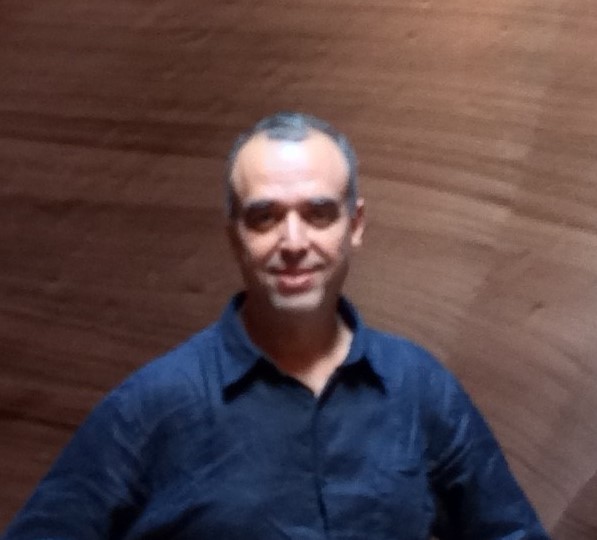
Abdel Lisser is Full Professor at the University Paris Saclay since 2001. He was heading the Graph theory and Combinatorial Optimization group at Computer Science Laboratory from 2006 to 2014. He moved to Signals and Systems Laboratory at CentraleSupelec in 2020. He was heading research group at France Telecom Research Center from 1996 to 2001. He got his Ph.D at the University of Paris Dauphine in Computer Science in 1987 and the Habilitation thesis at the University of Paris Nord in 2000. His main research area is stochastic optimization especially chance constrained optimization together with conic optimization. He also works on chance constrained stochastic games and Markov Decision Processes with chance constraints. Recently, he started working on dynamical neural networks and applications of machine learning in stochastic optimization. Applications areas are mainly energy planning optimization, autonomous vehicles and network design problems. He has already run different national and international projects in the recent years.
| Date | September 28, 2026 (Monday) |
|---|---|
| Time | 11:00 |
| Speaker | Professor Abdel Lisser |
| Venue | HW103, 1/F, Haking Wong Building, HKU |